Loft conversions combine structural work, weather risk, restricted access, and detailed internal fit-out. A quote built from a single headline allowance can therefore hide substantial cost and scope differences.
Turn the research into a real quote
Start with one live job, build the quote pack, and keep the costs tied to the price. No card required.
Build first quote freeThis guide walks through exactly how to price a loft conversion so you protect your margin from the first number you put on paper.
Step 1: Understand What Type of Loft Conversion It Is
Not all loft conversions are equal. Before you price anything, establish the type:
- Roof light / Velux conversion — The least structurally disruptive option. Current FMB and Checkatrade guides put the starting benchmark at roughly £27,500–£30,000.
- Dormer conversion — A box-shaped roof extension that adds headroom and floor area. Both current guides use about £50,000 as an average benchmark.
- Hip-to-gable conversion — Extends the sloped side of a roof to form a vertical wall, often with a rear dormer. Both guides use about £60,000 as an average benchmark.
- Mansard conversion — Rebuilds a roof slope and is normally the most structurally involved option. Current published benchmarks are roughly £65,000–£70,000.
These are national guide figures, not like-for-like quotes. The published scopes, property types, locations, finish levels, and VAT treatment can differ. Confirm all of those points before using a benchmark in a client conversation.
Step 2: Break Down the Cost Categories
A well-structured loft conversion quote should cover these cost areas:
Structural Works
- Engineer design, calculations, inspections, and Building Control
- Steelwork, padstones, bearings, floor structure, trimming, and temporary works
- Party Wall process where the proposed work falls within the Act
- Any strengthening or alteration discovered after opening up
Roofing Works
- Dormer structure, covering, insulation, flashings, drainage, and external finish
- Roof tiles or slates, including the cost and availability of matching the existing covering
- Roof windows — the FMB guide uses roughly £980–£1,200 for a standard unit, but size, flashing kit, access, and installation scope change the installed price
- Scaffolding, temporary covering, lifting, waste handling, and weekly hire overruns
Internal Works
- Permanent staircase and protected escape route — the FMB guide spans from about £1,200 for a simple softwood flight to £10,000+ for complex hardwood work
- Insulation, airtightness details, plasterboard, fire protection, and plastering
- Electrical and plumbing first fix, testing, second fix, heating, and ventilation
- En-suite — the FMB guide uses £3,000–£7,000 for a standard installation before unusual drainage or premium specification
- Joinery, decoration, flooring, sanitaryware, and client-selected finishes
Step 3: Calculate Your Labour Costs Accurately
Labour allowances can be understated when the estimate counts productive days but misses access difficulty, material hoisting, temporary protection, inspections, or weather delays on roofing work.
Build the labour allowance trade by trade from your own crew and subcontractor rates. Include survey and setup time, restricted access, lifting and material handling, temporary weather protection, inspections, snagging, and realistic hand-offs between structure, roofing, first fix, plastering, and second fix. Keep risk allowance separate so it is visible rather than hiding it inside a day rate.
Turn the research into a real quote
Start with one live job, build the quote pack, and keep the costs tied to the price. No card required.
Build first quote freeStep 4: Add Your Overheads and Margin
A sustainable quote needs to cover more than the visible labour and materials:
- Direct costs: Labour, materials, subcontractors, plant, scaffold, waste, and professional fees attributable to the job
- Overheads: Allocate a defensible share of van, insurance, tools, office, software, and management time using your own accounts
- Contingency and profit: Keep them as separate lines so an allowance for risk is not mistaken for earned profit
Use the margin formula rather than adding an arbitrary markup: selling price before VAT = total expected cost ÷ (1 − target gross margin). For example, £28,000 of fully loaded expected cost requires a £35,000 selling price for a 20% gross margin, before VAT. Your target must come from the business's real overhead and profit requirements.
Step 5: Present the Quote Professionally
A professional quote does two things: it wins the job, and it protects you legally. Your loft conversion quote should include:
- Itemised breakdown by trade/section
- Clear inclusions and exclusions (what's in the price and what isn't)
- Payment schedule tied to milestones
- A quote-validity period that reflects supplier validity and the likely project start date
- Your company details and registration number
The Biggest Margin Killers on Loft Conversions
These are predictable risk areas to test before finalising the quote:
- Underestimating scaffolding duration — If the roofing phase runs over, you're paying weekly scaffold hire fees you didn't price for.
- Hidden structural issues — State the assumptions behind the price and use a clearly described provisional allowance only where the scope cannot yet be confirmed.
- Material price changes — Date supplier prices, state the quote-validity period, and confirm high-value orders before committing to the client price.
- Scope changes — Record, price, and approve changes using the variation process agreed in the contract.
Use Software to Track Margin in Real Time
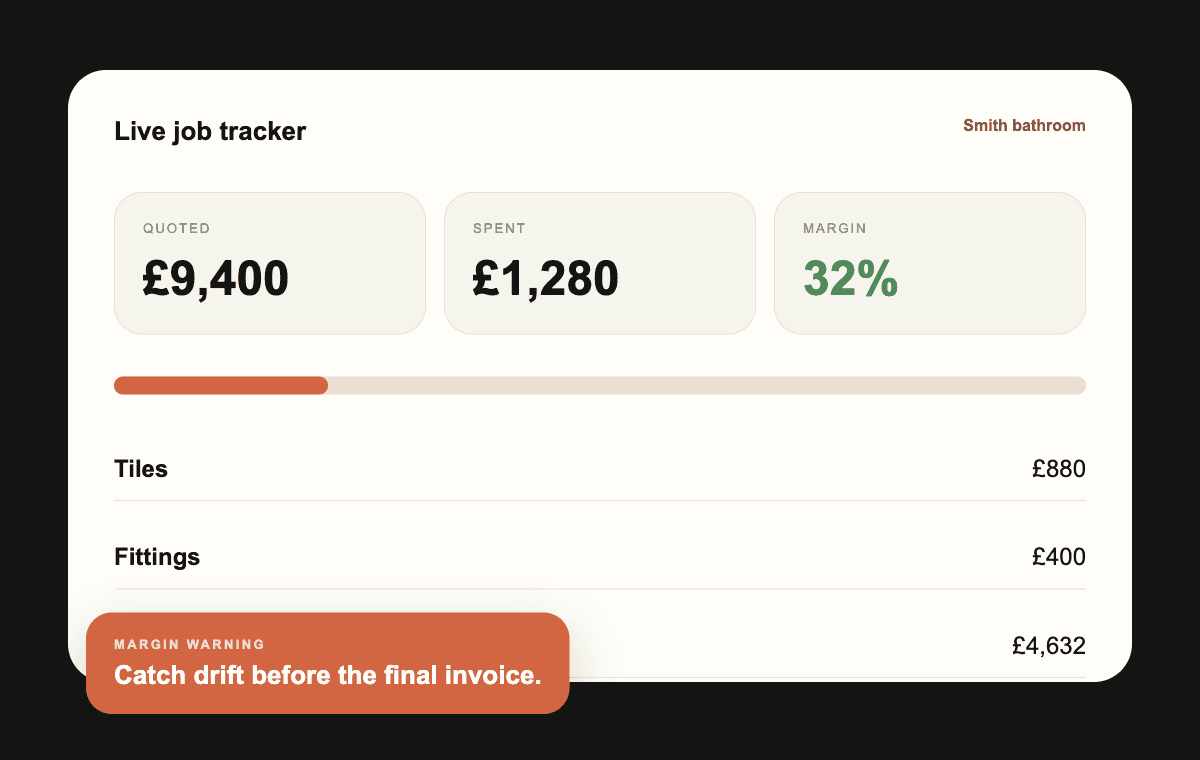
The best way to protect your margin isn't just quoting accurately — it's tracking actual costs against your estimate as the job progresses. If you're still using spreadsheets, you'll only find out you've lost money when it's too late to do anything about it.
QuoteBuild provides starting rates and supplier price checks for itemised quotes, then lets you log actual materials, labour, and subcontractor costs against the accepted figure. The live margin view shows the financial effect of the costs recorded on the job.
If you want the same quote-to-margin setup on your next loft job, see the full feature set or compare plans.
If lofts are part of your regular workload, see the builder page or browse all trade pages.